RESEARCH / WHAT WE ASK

Following carbon
through the atmosphere.

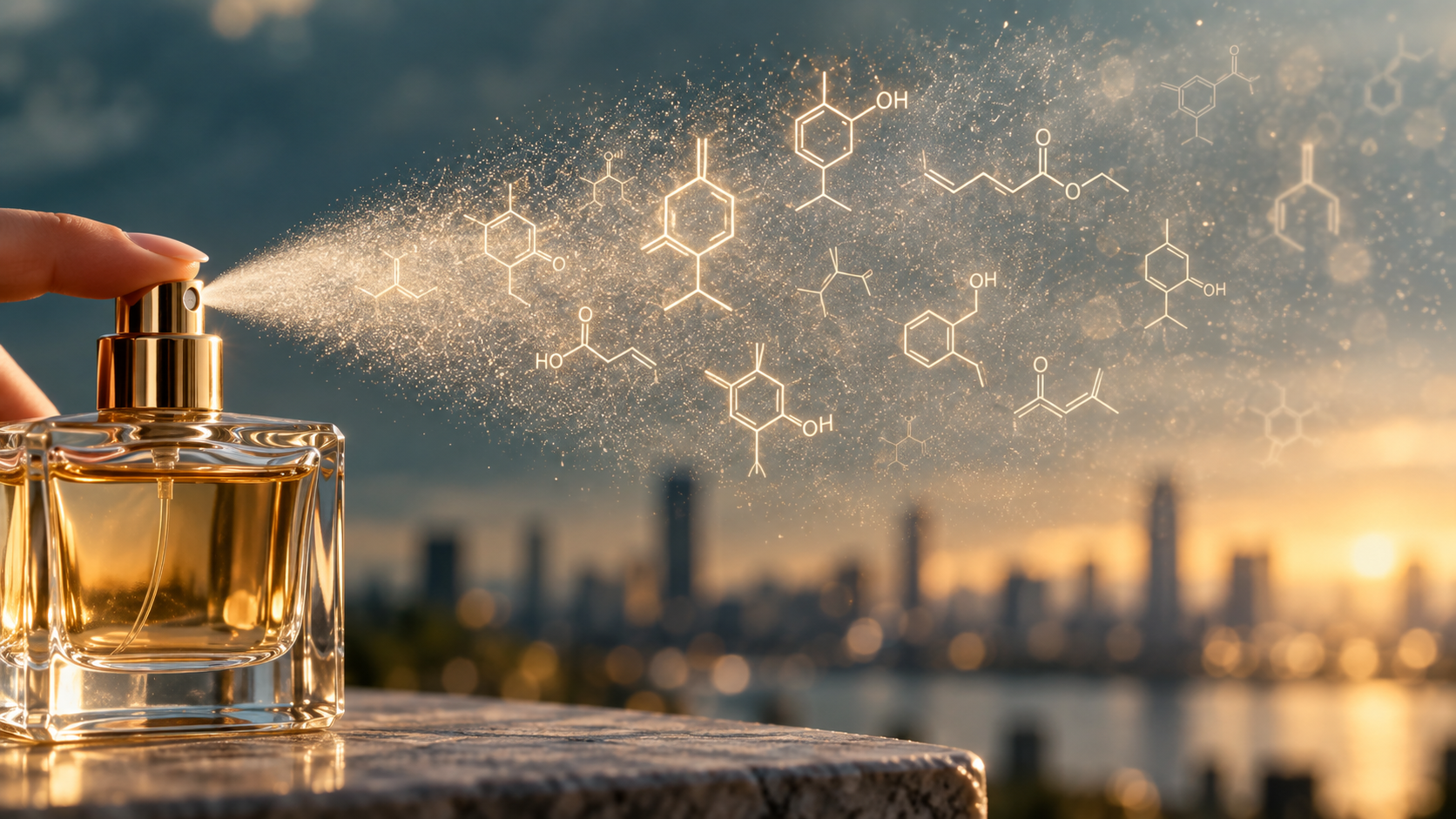
We study the sources, transformations and impacts of organic compounds in air—linking atmospheric chemistry to environmental outcomes.

OUR METHODOLOGICAL APPROACH

From air samples to atmospheric insights.

Connecting field and laboratory observations with chemical measurements and data-driven understanding.

  1. Field & laboratory sampling

    Collect gas-phase compounds and particle-phase material in real-world environments and controlled experiments.

    Gas phaseParticle phase
  2. Sample treatment

    Prepare collected samples using analytical protocols tailored to the compounds and sample matrix.

    PreparationQuality control
  3. Mass spectrometry

    Measure chemical signatures to characterize the composition of atmospheric gases and particles.

    Chemical characterizationMolecular insights
  4. Data processing & analysis

    Process and visualize measurements to interpret sources, transformations and environmental implications.

    Processing & visualizationAnalysis & interpretation
01

COMBUSTION EMISSIONS

How open burning deteorates urban and regional air quality?

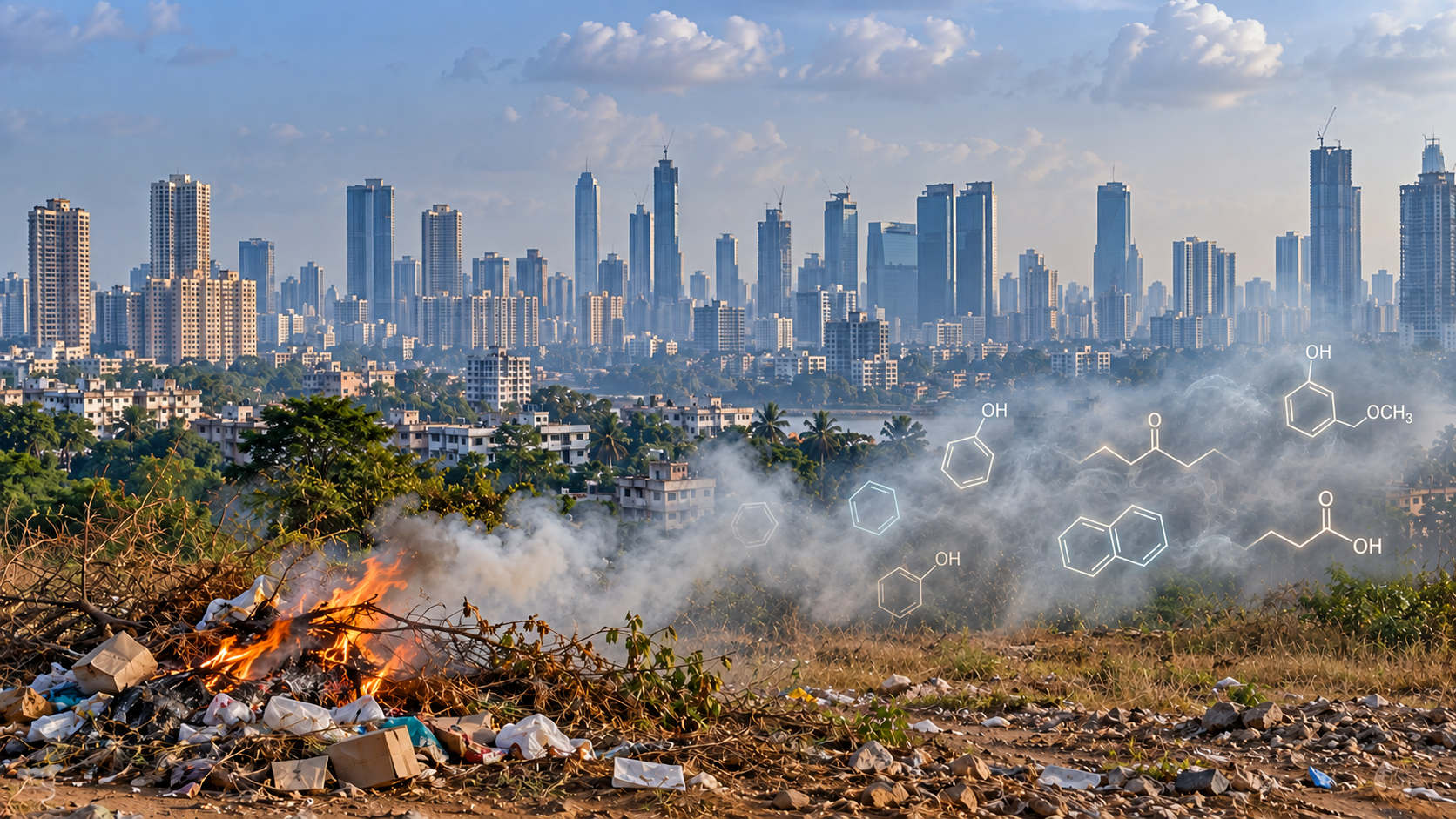
Unregulated open burning emissions are chemically highly complex. Constituted of thousands of organic compounds, these undergo atmospheric chemical transformations that can impact climate as well as human health over urban to larger spatial scales. We investigate complex organic emissions and characterize their environmental fate at the molecular level to constrain their influence on our quality of life.

VOCs and I/SVOCsSOAUrban outflows
02

NON-TRADITIONAL EMISSIONS

Volatile chemical products — What doesn't burn yet causes air pollution?

Following decades of regulatory policies, air pollution sources are evolving around the world. We study the emerging non-combustion sources that often surround us in our daily lives and are increasingly dominating air quality impacts in megacities worldwide.

VCPsFunctionalized organicsEvaporative emission pathways
03

MEASUREMENT SCIENCE / DEVELOPMENT OF NEW ANALYTICAL TECHNIQUES

How well can we understand aerosol formation at the molecular level?

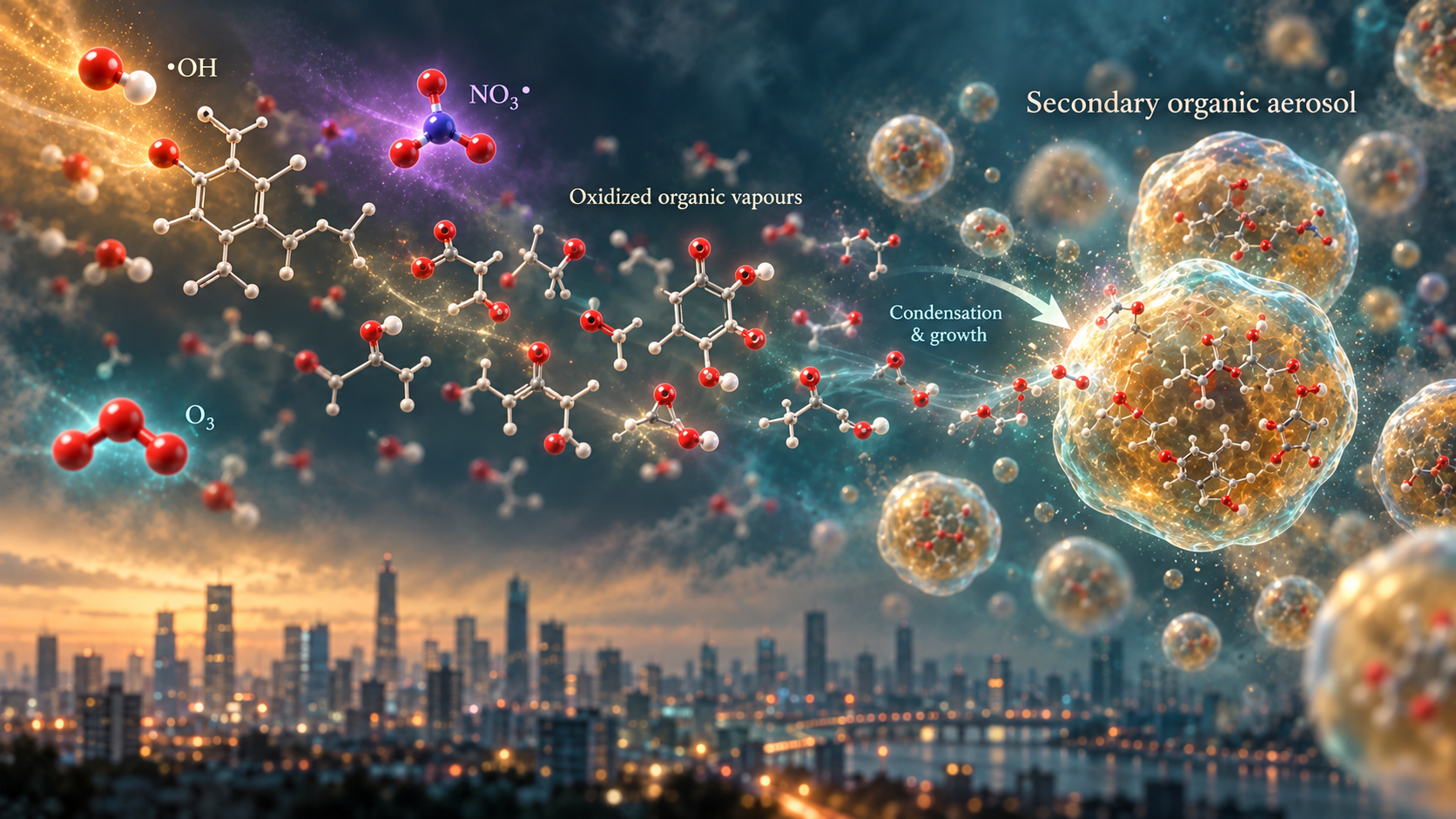
We develop and implement analytical approaches for molecular characterization of organic aerosol and their reactive gas-phase precursors via state-of-the-art mass spectrometry. This allows us to develop new insights into variuos chemical mechanisms that lead to environmental issues from human activities.

Mass spectrometryMolecular characterizationField measurements
04

DATA MODELING & APPLICATION OF ARTIFICIAL NEURAL NETWORKS IN UNDERSTANDING THE ENVIRONMENTAL SYSTEMS

Can chemical data provide actionable conclusions for climate and human health?

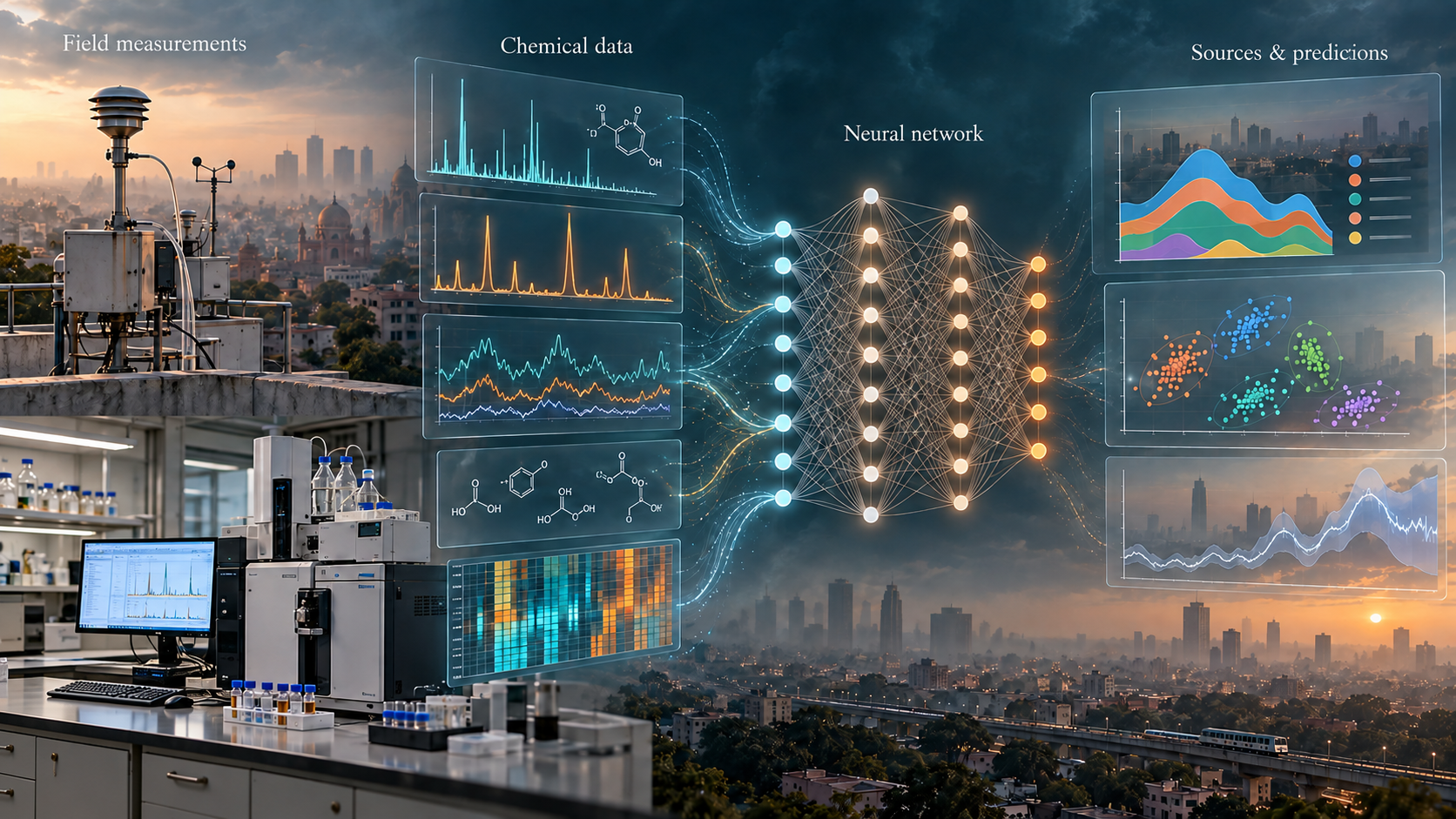
We employ source apportionment, machine learning and atmospheric modeling tools on our field and lab measurements to reveal the processes that matter for air quality, human health and climate.

Source apportionmentModelingNeural networksData science

IDEAS, METHODS, COLLABORATIONS

Let's investigate together.

Contact the lab ↗
INSIDE THE INSTRUMENT

How we separate ions.

m/z 43m/z 57m/z 71m/z 91m/z 121m/z 149m/z 191m/z 259m/z 355

Conceptual animation, slowed for visibility. Colored dots after the ion source represent positive ions; upstream bonded symbols represent sample molecules. Nine illustrative m/z values span 43–355 and are not assignments to specific compounds. Sizes and trajectories are illustrative. The quadrupole view is a projection of four rods, not a numerical trajectory simulation. Field arrows, RF phase, and strength are illustrative and not calibrated voltages or a field solver. TOF shows a single-reflection V-type analyzer with singly charged ions and negligible initial kinetic energy. Reflectron motion is schematic; energy-spread focusing is not numerically simulated.

FROM AIR TO SAMPLE

How we collect gases and particles.

A downstream vacuum pump draws air through each sampling train. In the gas-sampling line, mixed sample air first passes through an ozone and particle filter: particles are trapped and ozone is removed, while the sampled organic gases continue to the sorbent tube. In the aerosol line, particles collect on a filter. A mass flow controller (MFC) regulates the flow in each line.

Gas and aerosol sampling with downstream flow control and vacuum pumpsTwo independent sampling lines run left to right: sample air, sorbent tube or filter, mass flow controller, vacuum pump, and exhaust. In the gas line, an upstream ozone and particle filter traps incoming particles while organic gas molecules pass through to the sorbent. Colored molecules and particles accumulate in the collection media while air continues downstream. Organic moleculesAerosol particlesAir continues downstream

Two separate sampling arrangements are shown. Colors illustrate a mixture of compounds and particles. Collection is schematic: real retention depends on the sorbent, filter, analyte and operating conditions. The displayed flow is illustrative, not a recommended setting. Collection resets periodically; captured material does not move on to the pump.

PREPARING THE MOLECULAR MIXTURE

From collected sample to separated ions.

Animated sample preparation, chromatography and ionizationChoose thermal desorption into GC–MS or filter extraction into LC–MS. Colored neutral analytes leave the sample, separate in the column, acquire positive charge inside the ionization region, and enter the mass spectrometer.

Conceptual sequence; timing, sizes and retention order are illustrative. Colors distinguish analyte families. Separation reflects different interactions with the stationary phase, not molecular mass alone. Charge appears inside the ionization region before ions enter the mass analyzer. Colored illustrative peaks build only as their matching ion groups enter the analyzer and clear at the start of each cycle; peak positions and heights are not a predicted mass spectrum. The GC–MS source shows an electron beam crossing the neutral analyte stream to illustrate electron ionization; collisions and fragmentation are simplified. The filter example uses LC–MS with positive electrospray ionization; the downward spray and analyte interaction are schematic, with droplet formation and desolvation simplified. Actual extraction, cleanup and ionization methods depend on the analytical protocol.

FINDING PATTERNS IN COMPLEX MIXTURES

From molecular measurements to insight.

Follow a complex organic mixture through signal processing, a sample-by-feature data matrix, statistical and AI techniques, and visual interpretation. The sequence illustrates how chemical patterns and predictive relationships can be explored.

The data used in these illustrations is synthetic, not laboratory results or a fitted model. Features represent measured signals, not automatically identified compounds. The network symbolizes machine learning; the grouping and predictions are scripted demonstrations. Real predictions require validation and uncertainty assessment; patterns alone do not establish sources or causation.